Clarified Milk Punch · Volume 5
Vol 5 — Ingredients
Mixed Drinks — Clarified Milk Punch. What each part is for, which spirits reward the technique and which are wasted on it, why tea is doing more than flavouring, which acid to use, and what survives clarification.
5.1.1 The selection rule
Vol 3 established that clarification strips tannins, polyphenols, colour and harsher congeners, and keeps aroma volatiles, sugars, acids and alcohol. That single fact should drive every ingredient decision in the drink:
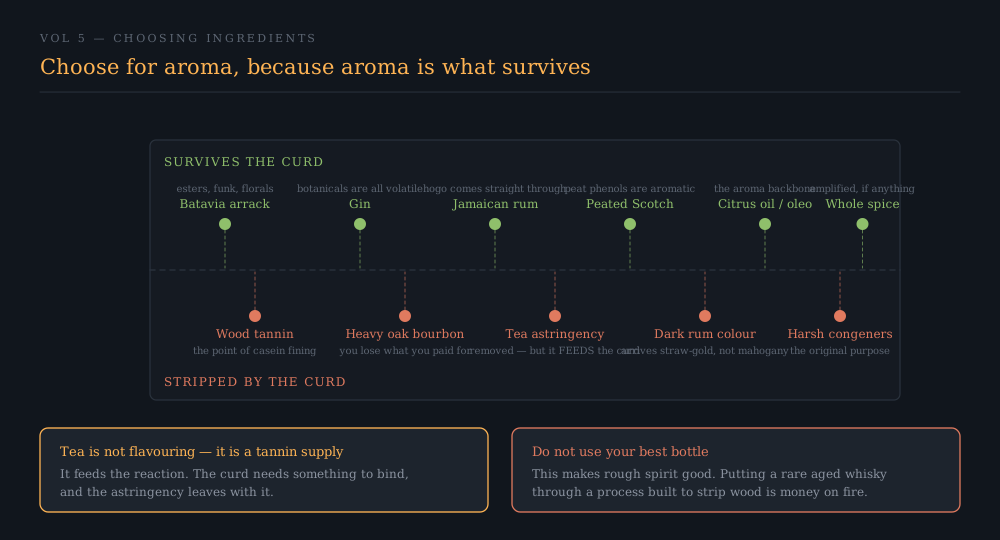
⭐ Choose ingredients for their aroma, not their colour or their grip — because aroma is what survives. A spirit whose whole appeal is deep colour and heavy wood tannin will arrive pale and diminished. A spirit whose appeal is smell will arrive intact and improved.
This is why the historical choices were not arbitrary, and why some very expensive modern substitutions are a waste.
5.1.2 Spirits
Batavia arrack — the historical answer, and still the best one. Distilled in Java from sugarcane and fermented red rice, it is intensely estery and aromatic: funky, floral, slightly savoury. Almost all of that is volatile, so almost all of it survives. It is what 17th- and 18th-century punch was built on and it remains the most characteristic base. Modestly priced, and a bottle goes a long way.
Aged rum. The natural fit. Jamaican rum’s hogo — heavy ester funk from long fermentation — comes through beautifully. Demerara rum brings depth. ⚠ Very dark, heavily coloured rums give up most of their colour to the curd, so a drink you expected to be mahogany arrives straw-gold. That is not a fault; it just surprises people.
Cognac and brandy. Franklin’s choice and the standard English one. Dried fruit and floral notes carry through well.
Bourbon and rye. Excellent, and the obvious bridge from the Old Fashioned dive. ⚠ A heavily oaked bourbon loses a lot of what you paid for — the wood tannin is precisely what casein binds. A younger, brighter, high-rye bourbon does better here than a big woody one, which inverts the usual advice.
Scotch. Peated Scotch is a genuinely interesting case: peat phenols are aromatic and largely survive, so a clarified peated punch keeps its smoke while losing its bite. Worth an experiment.
Gin. Botanical aroma is almost entirely volatile, so gin clarifies extremely well and makes a bright, clean punch. Underused.
Tequila and mezcal. Both work, and mezcal’s smoke behaves like Scotch’s.
🔴 Do not use your best bottle. This is a technique for making good spirit taste rounder and rough spirit taste good. A rare, subtle, beautifully aged whisky put through a process specifically designed to strip wood character is money set on fire — and Vol 2’s history says exactly why: the method exists to rescue harsh spirit, not to improve refined spirit.
5.1.3 Tea — the ingredient people treat as optional
Tea is not flavouring. It is a tannin supply, and in most historical recipes it is structural.
Vol 3 explained that casein binds polyphenols. Tea is one of the richest polyphenol sources in any kitchen. So tea in a milk punch feeds the reaction: it gives the curd something to grab, which improves clarification, and the astringency it would otherwise contribute is removed along with it. You get tea’s aroma without tea’s grip.
- Black tea — the traditional choice. Assam, Ceylon, English Breakfast. Most tannin, most body.
- Earl Grey — bergamot is volatile and comes through strongly. An easy upgrade.
- Green tea — lighter, more delicate, less tannin to work with.
- Smoked teas (Lapsang Souchong) — dramatic, and survives well.
Brew it strong, roughly double normal strength, and let it cool before it goes into the punch.
⚠ A punch with no tannin source at all clarifies less completely. If you skip the tea, expect a slightly hazier result — and consider that the tea was doing a job, not decorating.
5.1.4 The acid
This is the engine of the whole drink, not a flavour choice. It has to take the batch below pH 4.6.
- Lemon — the default. Clean, bright, plenty of acid.
- Lime — sharper and more aromatic; excellent with rum and agave.
- Orange and grapefruit — ⚠ not acidic enough on their own. Wonderful for aroma and oleo saccharum, but they must be backed by lemon or lime or the milk will not fully break.
- Pineapple — historically common, both acidic and aromatic. Very good.
- Vinegar and verjuice — used historically. Effective, and a different register.
- Citric acid powder — the precise option. Lets you set pH exactly without adding more juice flavour, which is useful when the citrus is already where you want it.
🔴 Never reduce the acid to make a softer drink. If it is too tart, add sugar; the acid load is doing chemistry, not just taste. Cutting it is the most common reason a batch never curdles properly.
5.1.5 Sugar
Sugar does three jobs here: balance, body, and keeping (Vol 7 — sugar lowers water activity).
- White sugar — neutral, and the best vehicle for oleo saccharum.
- Demerara — light toffee, excellent with rum and aged spirits.
- Honey — floral and assertive; thin it first.
Most of it should go in as oleo saccharum (Vol 4, step 1). That is where the citrus aroma comes from, and citrus oil is one of the things that survives clarification best.
5.1.6 Spice
Aroma passes through, so spice earns its place.
Nutmeg is the classic and it is in Franklin’s recipe and most of the period ones — freshly grated, always. Cinnamon, clove, star anise, allspice, cardamom, black pepper and vanilla all work. Whole, never ground, for the same reason as any mulled drink: ground spice will not dissolve, so it clouds the liquid and fights the clarification you are about to do.
⚠ Go lighter than feels right. Clarification removes bitterness and grip but leaves aroma at full strength, so a spice load that seems balanced in the unclarified punch will be too loud in the finished bottle. This is one of the few places where the process amplifies rather than subtracts.
5.1.7 Milk
Whole milk. The fat mostly leaves with the curd but it helps build a coherent one on the way, and the result is rounder than skimmed.
- Skimmed or semi-skimmed work and give a marginally thinner result.
- Buttermilk is already acidic and curdles readily; some recipes prefer it.
- 🔴 Plant milks are not a substitute. The entire technique depends on casein, which is a dairy protein. Oat, almond and soy milks have nothing that behaves the way casein does at pH 4.6, and they will not clarify a punch. A non-dairy version needs a different mechanism altogether — agar, or a centrifuge (Vol 9).
Fresh milk, and not on its last day. It is going to be held at room temperature in an acidic bath for a while.
5.1.8 Sources and further reading
- David Wondrich, Punch (2010) — historical ingredient choices, especially arrack.
- Dave Arnold, Liquid Intelligence (2014) — acid balancing, and measuring rather than guessing.
- Vol 3 for why aroma survives and tannin does not; Vol 9 for non-dairy clarification.
- The Distilling deep dive for what arrack, rum and brandy actually are.
Comments (0)